
Oratory of the Rosary of S. Cita - Palermo
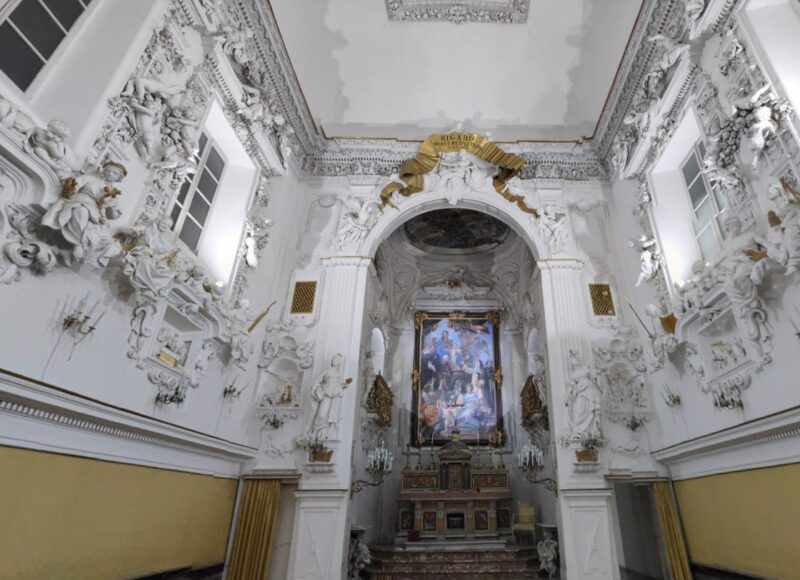
Via Valverde. Built in the sixteenth century. It is accessed through a small portal surmounted by a marble shield that leads through a staircase to the majolica gallery on which two marble portals in late Renaissance style face. A large anti-oratory leads to the oratorial hall, entirely decorated by Giacomo Serpotta between 1686 and 1718. The high altar contains a painting by Carlo Maratta depicting the Madonna del Rosario (1695). The quadrangular presbytery basin was decorated by Serpotta between 1717 and 1718 with the addition of two statues representing Judith and Esther.
Property included in the Multimedia Archive of Esoteric Cultural Heritage
The property has been recognised as a property that could present characteristics attributable to theCultural EsotericismGroup belonging: A
Methodological note:
The assets entered in the archive are divided into three groups, based on their level of recognition and documentation:
- Group A – Well signposted: This includes cultural assets identified as potentially esoteric. This is an initial observation phase, during which the asset is studied, compared with sources, and critically evaluated.
- Group B – Recognized asset: It includes assets for which there are reliable studies and documentation attesting to their belonging to the Esoteric Cultural Heritage, but which are not yet accompanied by the complete esoteric profile.
- Group C – Well documented: It contains fully recognized and analyzed items, accompanied by a detailed esoteric description illustrating their symbolic meanings, interpretations, and historical-cultural context. This is the most advanced level of documentation within the archive.
To ensure rigor and interpretative consistency, the archive is based on a rigorous methodology aimed at avoiding the indiscriminate inclusion of cultural assets. To this end, specific criteria are adopted: recognition tools and a classification system, illustrated in the project Archive of Cultural Esotericism, described on the external site Experiential itineraries, to which we refer for further methodological information.
